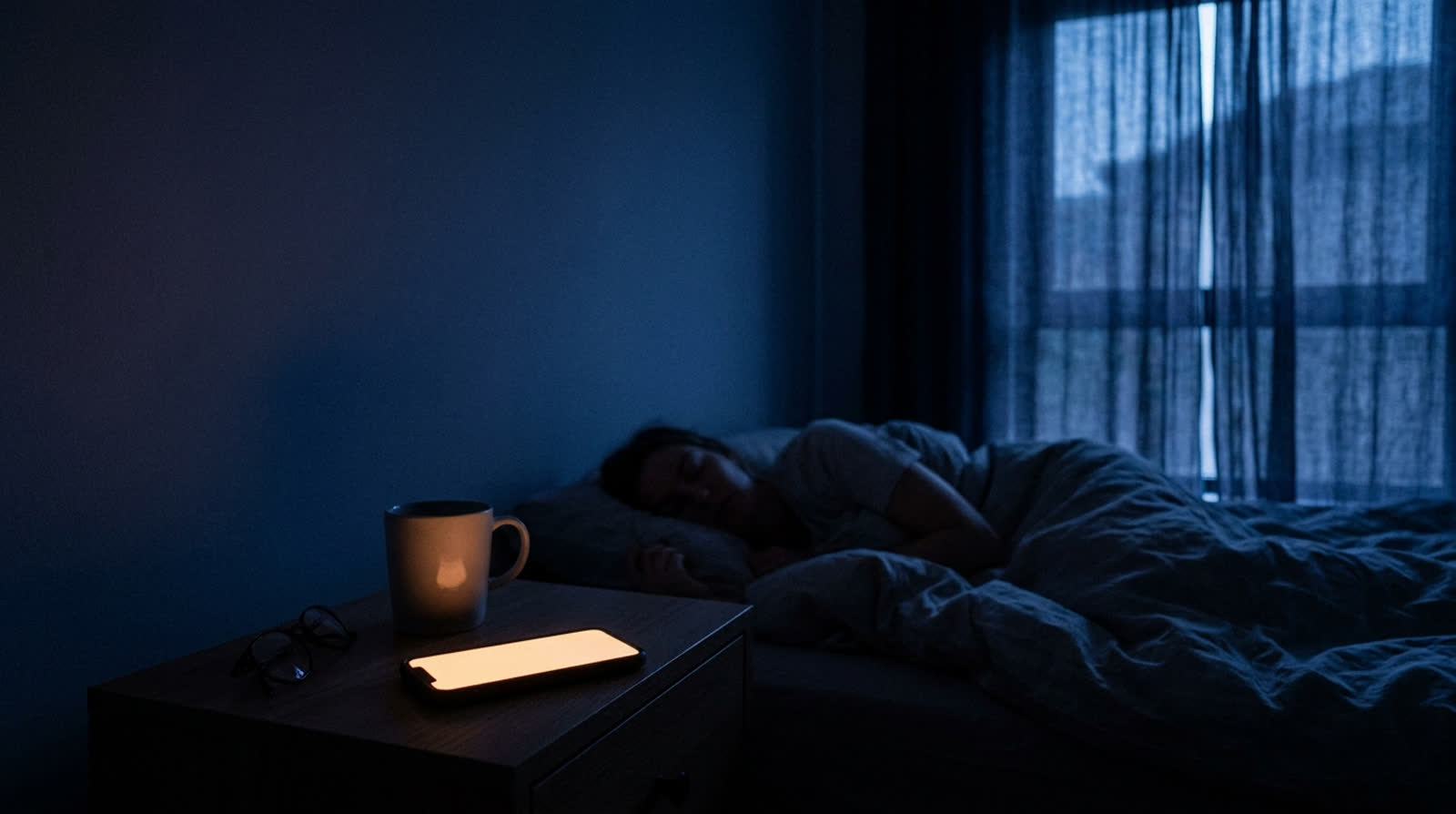
It's eleven at night. Someone in Berlin, London or Stockholm, after a heavy day, opens Instagram and finds your retreat. Something lights up. They write: "Hi, do you have availability in September?". Then they put the phone down and go to sleep.
You read that message at nine the next morning. You reply kindly, helpfully, properly. But it's late. Because that person, last night, didn't write only to you.
The window closes fast
Two serious studies exist on this, and it's worth knowing what each one says, because they get quoted carelessly everywhere.
The first is from 2007: the Lead Response Management Study by James Oldroyd, then a researcher at MIT, run with InsideSales.com on over 15,000 sales leads. The result that made it famous: contacting a person within 5 minutes of their inquiry makes them 21 times more likely to be qualified as a customer than contacting them after 30 minutes. Half an hour of delay, not two days. Half an hour.
The second is from Harvard Business Review, 2011: an audit of 2,241 US companies to which the researchers sent an interested-customer inquiry, stopwatch running. Average response time among those who replied: 42 hours. Nearly two days. And one company in four, 23%, never replied at all. The same study measures that whoever replies within the hour is nearly 7 times more likely to qualify the lead than whoever replies in the following one.
They're dated studies born in the phone-sales world, that has to be said. But the mechanism they describe hasn't aged, if anything it has compressed: in 2007 the comparison was between phone calls, today your potential guest is holding a phone with four chats open in parallel. In the hours when you're not answering, someone else is.
Why speed matters this much
It's not performance anxiety, it's how the decision to buy an experience works. That person at eleven at night was at maximum interest: they'd just seen your photos, they were picturing themselves there. Interest is a spike, not a plateau. Every hour that passes, life wedges itself back in: work, kids, other options, the doubt. Replying immediately isn't about closing the sale at eleven at night. It's about hooking the person on the spike, when the wanting is stronger than the doubting.
There's a second effect too, less obvious: the first reply is a signal about everything else. If you answer in three minutes, the person assumes the stay will be cared for the same way. If you answer in two days, they assume the opposite. For a €900 experience, responsiveness is the first proof of quality you give.
Your problem isn't the night. It's that you can't always be there
And here's the honest point: you cannot reply at eleven at night. You're sleeping, you're living, you're looking after the guests who are already there. As you should. The problem isn't your laziness: it's that a human being can't staff a chat 24 hours a day, and your international clients write exactly when you're offline. Berlin writes after dinner, New York writes in the middle of your night.
That's why the immediate reply needs automating, at least the first exchange. Not to replace you: to keep the person warm during the minutes worth 21x, collect the basics (dates, how many people, what kind of experience) and tell them clearly when you'll answer in person. The next day it's you talking, human to human, with a person who in the meantime didn't run off and has already told you what they're after.
What you can do today
First: measure the problem. Scroll through last month's messages and check the arrival times. In my experience with camps, a big slice lands in the evening and on weekends, exactly when you're not there. Count your response times too: if the average is over a few hours, you're leaving bookings on the table.
Second: set up an honest auto-reply right now, even without a chatbot. On WhatsApp Business and Instagram it takes ten minutes: "Thanks for your message! I'll reply personally by tomorrow morning. Meanwhile, tell me: which dates, and how many of you?" It's not as elegant as a real assistant, but it keeps the door open and puts the person to work for you.
Third: when you're online, answer the new lead before everything else. The email to your accountant can wait an hour. A potential guest's interest spike can't.
The next step up is an automated assistant that replies and qualifies in your place, day and night, without sounding fake, and hands you the person already primed. That's exactly the WhatsApp AI chatbot we build at GYT, so if you'd like to see how many inquiries currently arrive outside your hours, and how many you're losing, it's one of the first things we look at together in a free audit.
Sources & references
- Lead Response Management Study · James Oldroyd (MIT) / InsideSales.com, 2007 · https://www.leadresponsemanagement.org/lrm_study/ (executive summary: https://www.onecavo.com/wp-content/uploads/2015/11/MIT-InsideSales.com_Lead-Response-Management.pdf) · The 21x figure: probability of qualifying a lead contacted within 5 minutes vs 30 minutes. Verified July 2026.
- Harvard Business Review · "The Short Life of Online Sales Leads" (March 2011) · https://hbr.org/2011/03/the-short-life-of-online-sales-leads · Audit of 2,241 US companies: average response 42 hours, 23% never replied, ~7x higher qualification odds replying within the hour. Verified July 2026.
Want more direct bookings?
Let's look at your site and your bookings together: see if the system fits and what you can improve straight away.
Book your free audit →Keep reading

On June 3, 2025, GetYourGuide raised commissions to 30%. With one month's notice.
What every host can learn from the day thousands of operators discovered that someone else decides their margin.
Read →
What does an empty seat cost? The number you should know by heart.
It isn't zero. And until you calculate it, every decision on prices, discounts and advertising is made in the dark.
Read →
Your guest isn't buying "yoga". They're buying a way out of burnout.
Why your website is selling the wrong thing, and how to fix it.
Read →